
Key Takeaways
- Mold can begin developing within 24 to 48 hours after water damage if moisture remains, making a quick response essential to minimize contamination.
- Understanding how long does it take for mold to grow helps homeowners recognize why immediate drying and inspection are critical after leaks or flooding.
- The speed of mold growth depends on several factors, including moisture levels, temperature, humidity, ventilation, and the type of building materials affected.
- Not every water-damaged surface will immediately develop black mold, but prolonged damp conditions significantly increase the risk of mold colonization.
- Professional inspection and remediation can identify hidden moisture, remove contaminated materials safely, and help prevent recurring mold problems.
After a burst pipe, roof leak, appliance failure, or flood, one of the first concerns many property owners have is how long does it take for mold to grow. Mold is a natural part of the environment, but once excess moisture enters a building, mold spores can quickly settle on damp surfaces and begin multiplying.
Many people assume mold takes weeks or months to develop. In reality, under the right environmental conditions, mold growth can begin much sooner. Understanding the mold growth timeline allows homeowners and property managers to act before a small moisture problem becomes a larger remediation project.
When significant water damage occurs, professional mold remediation Charlotte NC services help identify hidden moisture, assess contamination, and restore healthy indoor environments. AWP Environment Solutions provides environmental remediation services that focus on identifying moisture sources and resolving mold issues using industry-recognized remediation practices.
Why Mold Grows After Water Damage
Mold spores are naturally present both indoors and outdoors, but they remain inactive until they have the right conditions to grow. After water damage, excess moisture creates the perfect environment for mold, allowing it to spread quickly if the affected area is not dried promptly.
- Moisture: Water from leaks, flooding, plumbing failures, roof damage, or high humidity provides the moisture mold needs to grow. Even hidden dampness inside walls or floors can support mold development.
- Organic Material: Mold feeds on cellulose found in common building materials such as drywall, wood framing, paper backing, ceiling tiles, insulation, and carpeting, making these materials especially vulnerable after water damage.
- Suitable Temperature: Most indoor spaces maintain temperatures that are ideal for mold growth throughout the year, allowing mold to develop whenever moisture is present.
How Long Does It Take for Mold to Grow?
The most accurate answer to how long does it take for mold to grow is that visible growth may begin within 24 to 48 hours after materials become wet. However, mold development occurs in stages.
Mold Growth Timeline After Water Damage
| Time After Water Damage | What Happens |
|---|---|
| 0 to 24 Hours | Building materials absorb moisture. Mold spores begin settling on damp surfaces. |
| 24 to 48 Hours | Early mold colonies may begin forming if moisture remains. |
| 48 to 72 Hours | Visible mold spots can develop on drywall, wood, insulation, and carpeting. |
| 3 to 7 Days | Mold colonies expand rapidly and spread into porous materials. |
| After One Week | Extensive contamination may affect structural components and indoor air quality if moisture is not corrected. |
While every property is different, this timeline demonstrates why restoration professionals recommend drying affected materials immediately following water intrusion.
Mold How Long Does It Take to Grow on Different Materials?
The answer to mold how long does it take to grow also depends on the building materials involved.
1. Drywall
Drywall absorbs water quickly due to its paper backing, making it one of the first materials affected after water damage. If not dried within 24–48 hours, mold can begin growing on or behind the surface.
2. Wood Framing
Wood retains moisture for long periods, especially inside walls and crawl spaces. This creates ideal conditions for mold to spread beneath finished surfaces, often without visible signs.
3. Carpet and Padding
Carpets and their padding trap water after leaks or flooding. If they remain damp, mold can develop deep within the fibers and underneath the flooring.
4. Ceiling Tiles
Porous ceiling tiles easily absorb moisture from roof leaks or plumbing problems. Water stains are often an early warning sign of potential mold growth.
5. Insulation
Wet insulation holds moisture inside wall cavities and attics, creating hidden areas where mold can grow undetected until a professional inspection is performed.
How Long Does It Take for Black Mold to Grow?
Many homeowners specifically ask how long does it take for black mold to grow after water damage. Although different mold species grow at different rates, black mold associated with prolonged moisture can begin developing within several days when conditions remain consistently damp.
The exact timeline depends on factors such as:
- Duration of water exposure
- Humidity levels
- Air circulation
- Building materials
- Temperature
- Moisture trapped behind walls
Rather than focusing only on black mold, any visible mold growth should be addressed because all indoor mold indicates an ongoing moisture issue.
What Causes Black Mold?
Black mold develops in areas where excess moisture remains for an extended period. The most common causes include:
- Roof Leaks: Slow leaks can trap moisture inside ceilings and attics, creating ideal conditions for mold growth.
- Plumbing Failures: Leaking pipes behind walls or under sinks often go unnoticed until mold appears.
- Flooding: Water from floods can soak drywall, flooring, insulation, and wood, leading to widespread mold growth if not dried quickly.
- HVAC Condensation: Air conditioning systems with poor drainage or excess condensation can keep nearby materials damp.
- High Indoor Humidity: Humidity levels above 60% can cause condensation on walls, windows, and other surfaces, encouraging mold to grow.
Addressing moisture problems promptly is the best way to prevent black mold from developing and spreading.
How Fast Does Black Mold Grow?
Many people wonder how fast does black mold grow compared to other molds. Growth speed depends less on the specific species and more on environmental conditions. Several factors accelerate mold development:
- High humidity
- Warm indoor temperatures
- Limited ventilation
- Porous building materials
- Continuous moisture exposure
Once colonies become established, mold can continue expanding until the moisture source is eliminated.
Can Mold Grow Overnight?
A common question after discovering a leak is can mold grow overnight. While visible mold usually does not appear after a single night, mold spores can begin colonizing damp building materials within the first 24 to 48 hours when moisture is present.
Although you may not immediately see mold, microscopic growth may already be developing behind walls, under flooring, or inside insulation if the affected area remains wet. The longer moisture remains, the greater the risk of mold spreading.
Prompt drying and repairing the source of the water within the first day are among the most effective ways to reduce the risk of significant mold contamination and costly remediation.
How Does Black Mold Spread?
Understanding how does black mold spread helps explain why untreated mold often becomes a larger problem.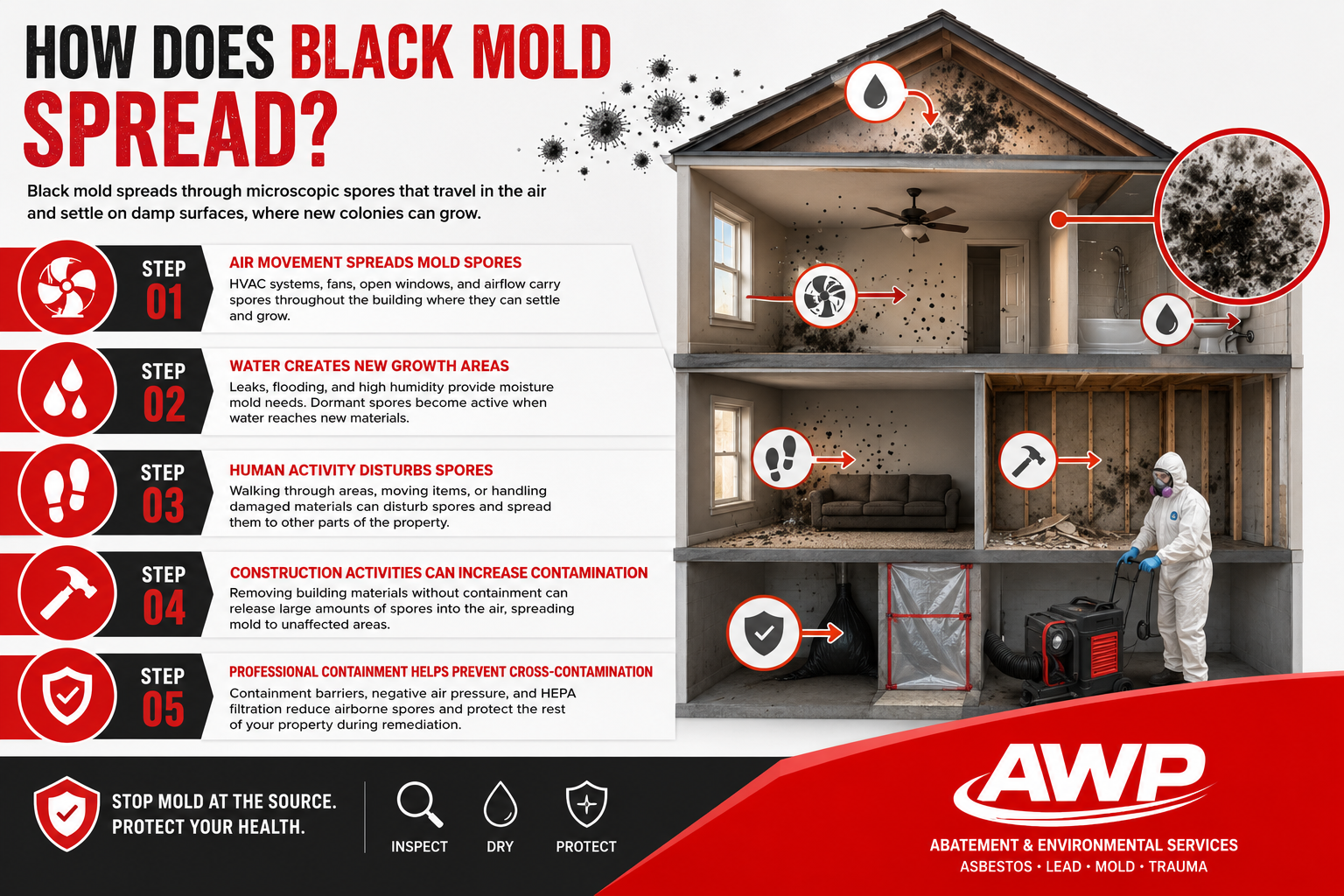
Mold reproduces by releasing microscopic spores that travel easily through the air and settle on damp surfaces where new colonies can develop.
Step 1: Air Movement Spreads Mold Spores
HVAC systems, fans, open windows, and natural airflow can carry mold spores throughout a building. Once airborne, these spores may settle in other moisture-prone areas and begin growing if suitable conditions exist.
Step 2: Water Creates New Growth Areas
Recurring roof leaks, plumbing leaks, flooding, or excess humidity provide the moisture mold needs to grow. As water reaches new building materials, dormant spores can become active and form new mold colonies.
Step 3: Human Activity Disturbs Spores
Walking through contaminated areas, moving mold-damaged furniture, or handling affected building materials can disturb spores and spread them to other parts of the property. Without proper precautions, everyday activities can unintentionally increase contamination.
Step 4: Construction Activities Can Increase Contamination
Removing drywall, insulation, flooring, or ceiling materials without proper containment may release large numbers of spores into the air. These spores can spread into unaffected rooms, making remediation more difficult.
Step 5: Professional Containment Helps Prevent Cross-Contamination
Professional mold remediation Charlotte uses containment barriers, negative air pressure systems, and HEPA filtration equipment to reduce the spread of airborne spores during cleanup. These measures help isolate contaminated areas and protect unaffected parts of the property throughout the remediation process.
How Long Do Mold Spores Live?
Mold spores are remarkably resilient and can survive for extended periods under dry conditions. Instead of dying quickly, they often remain dormant until moisture, warmth, and suitable organic materials become available, allowing them to become active again.
This is one of the main reasons mold frequently returns after surface cleaning. Removing only the visible mold without addressing the source of moisture allows dormant spores to remain in the environment and potentially grow again when conditions are favorable.
Effective mold remediation focuses on more than mold removal alone. Identifying and correcting the underlying moisture problem, thoroughly drying affected areas, and removing contaminated materials when necessary are essential steps for reducing the likelihood of future mold growth.
Signs Mold May Already Be Growing
Visible mold is only one indicator of contamination.
Other warning signs include:
- Persistent musty odors
- Peeling paint
- Water stains
- Soft drywall
- Bubbling wallpaper
- Increased allergy symptoms indoors
- Discoloration around windows or ceilings
If these conditions appear after water damage, professional inspection can help determine whether hidden mold is present.
What Happens During Professional Mold Remediation?
When mold growth becomes widespread, professional remediation provides a structured approach to addressing contamination.
The process typically includes:
- Inspection and Moisture Detection: Technicians identify moisture sources using specialized equipment.
- Containment: Affected areas are isolated to reduce the spread of mold spores.
- Removal of Contaminated Materials: Severely damaged drywall, insulation, carpeting, or other porous materials may require removal.
- Cleaning and Air Filtration: HEPA filtration and specialized cleaning methods help reduce airborne mold spores.
- Moisture Correction: Leaks and humidity issues are resolved before restoration begins.
Professional Mold Remediation Services in Charlotte NC focus on addressing both mold growth and the moisture conditions that allowed it to develop.
When Mold Damage Requires Selective Demolition
In some situations, mold spreads behind walls, beneath flooring, or inside ceiling assemblies where cleaning alone is not sufficient. Carefully planned selective demolition services Charlotte allow damaged building materials to be removed while preserving unaffected portions of the structure, supporting effective mold remediation and preparing the space for safe restoration.
1. Hidden Mold Often Requires Material Removal
Mold frequently develops inside wall cavities, beneath flooring, above ceilings, and behind insulation where it cannot be reached through standard cleaning methods. Once mold penetrates porous building materials, simply wiping the surface is usually not enough to eliminate the contamination.
2. Selective Demolition Targets Only Affected Areas
Instead of removing large sections of a building, selective demolition focuses only on materials that have been damaged by mold or moisture. This may include contaminated drywall, insulation, flooring, ceiling panels, or trim while leaving unaffected areas intact.
3. Unaffected Building Materials Are Preserved
A targeted demolition approach helps preserve healthy structural components whenever possible. By removing only damaged materials, property owners can avoid unnecessary reconstruction, reduce waste, and maintain more of the original building.
4. Contaminated Materials Are Safely Removed
Removing mold-contaminated building materials helps eliminate the source of ongoing contamination. Once affected materials have been removed, remediation professionals can thoroughly clean, dry, and treat the remaining structure to reduce the risk of future mold growth.
5. Hidden Damage Becomes Accessible
Selective demolition provides access to concealed spaces where moisture and mold may be present. This allows professionals to inspect wall cavities, ceiling assemblies, and subfloors for additional damage that may not have been visible during the initial inspection.
6. The Property Is Prepared for Restoration
After contaminated materials have been removed and the affected areas have been fully remediated, the property is ready for restoration. New drywall, insulation, flooring, and other building components can then be installed to return the space to a safe and functional condition.
7. Targeted Demolition Can Reduce Overall Costs
Because selective demolition removes only the materials that are actually damaged, it often reduces repair costs, shortens restoration timelines, and minimizes disruption compared with full-scale demolition. This efficient approach supports both effective mold remediation and a smoother rebuilding process.
Environmental Remediation After Large-Scale Water Damage
Large-scale water damage can create environmental concerns that extend beyond visible mold growth, often requiring a environmental remediation services to restore the property safely.
- Moisture assessments help identify hidden water intrusion and areas at risk of further damage.
- Environmental remediation may include the removal of contaminated or water-damaged building materials.
- Indoor environmental evaluations help assess potential air quality concerns and hidden contamination.
- Mold, bacteria, and other contaminants may be addressed as part of the remediation process when necessary.
- Restoration planning helps determine the safest and most efficient path to repairing the property.
- A comprehensive approach supports the return of residential and commercial buildings to safe, functional conditions after significant water intrusion.
Preventing Mold After Water Damage
Property owners can reduce mold risks by acting quickly after water exposure.
- Stop the water source immediately.
- Remove standing water as soon as possible.
- Dry affected materials within 24 to 48 hours.
- Increase ventilation where appropriate.
- Monitor humidity levels.
- Replace materials that cannot be adequately dried.
- Schedule a professional inspection after major flooding.
Rapid action often prevents extensive remediation later.
Conclusion
Knowing how long does it take for mold to grow after water damage can help property owners respond before mold becomes a more serious problem. In many cases, mold begins developing within 24 to 48 hours, making immediate drying and moisture control essential. Waiting too long to address leaks, flooding, or persistent dampness can allow mold to spread into walls, flooring, insulation, and other building materials, increasing both repair costs and restoration time.
If your home or commercial property has experienced water damage or you suspect hidden mold growth, AWP Environment Solutions can help evaluate the situation and recommend an appropriate course of action. Get in touch with us to learn more about professional mold remediation and environmental restoration services that help protect your property and indoor environment.