
Key Takeaways
- Black mold is only one of many mold species found in homes and commercial buildings, and appearance alone is not enough to identify it accurately.
- Understanding black mold vs regular mold helps property owners recognize when mold growth requires professional assessment instead of simple cleaning.
- Mold exposure can contribute to respiratory irritation, allergies, and other health concerns, especially in people with asthma, weakened immune systems, children, and older adults.
- Moisture control is the most effective long-term strategy because mold cannot continue growing without a water source.
- Certified black mold remediation addresses both visible mold and the underlying moisture problem, helping reduce the chance of future growth.
Finding dark stains on a wall, ceiling, or basement often leads homeowners to ask the same question: Is this black mold? While many people associate every dark-colored mold with dangerous contamination, the reality is more complex. Several mold species can appear black, green, brown, or gray, and only laboratory testing can determine the exact type.
Understanding what is black mold, how it differs from other household molds, and when professional remediation is necessary can help you make informed decisions without unnecessary panic. Whether you own a home, manage rental properties, or oversee commercial buildings, recognizing the signs of mold early can reduce structural damage and improve indoor air quality.
For properties experiencing extensive moisture damage or recurring mold issues, professional mold remediation Charlotte NC services focus on identifying the source of contamination, safely removing affected materials when necessary, and restoring healthy indoor environments. AWP Environment Solutions provides certified environmental remediation services designed to address mold safely and effectively.
What Is Black Mold?
The term black mold most commonly refers to Stachybotrys chartarum, a mold species that grows in areas with prolonged moisture exposure. However, not every dark-colored mold belongs to this species.
Black mold typically develops on materials such as:
- Drywall
- Ceiling tiles
- Wood framing
- Insulation
- Paper-backed building materials
- Carpet padding
Unlike surface mildew that forms in damp bathrooms, black mold often develops after persistent water intrusion caused by leaks, flooding, plumbing failures, or poor ventilation. Because mold spores naturally exist in the environment, growth occurs only when moisture, organic material, and suitable temperatures combine.
What Does Black Mold Look Like?
One of the most searched questions is what does black mold look like, but appearance alone should never be considered definitive identification. Common characteristics include:
- Dark green, black, or charcoal coloration
- Slimy or wet texture when actively growing
- Dry, powdery appearance after drying out
- Irregular circular or spreading patches
- Growth around water-damaged building materials
Fresh colonies often appear shiny because of moisture, while older colonies may look dull or dusty. Although these characteristics are common, many other mold species look similar. Professional sampling remains the only reliable method for species identification.
Black Mold vs Regular Mold
Many people assume black mold is the only mold worth worrying about. In reality, various molds can affect indoor air quality and building materials.
| Feature | Black Mold | Regular Mold |
|---|---|---|
| Typical Color | Black or dark green | White, green, brown, yellow, gray, orange |
| Common Growth Areas | Water-damaged drywall, wood, insulation | Bathrooms, kitchens, windows, basements |
| Moisture Requirement | Long-term moisture | Moderate to high humidity |
| Appearance | Slimy when wet | Powdery, fuzzy, or velvety |
| Potential Health Concerns | Can contribute to respiratory symptoms | Similar allergic and respiratory reactions |
| Removal Method | Often requires professional remediation | Small surface growth may sometimes be cleaned if moisture is controlled |
The important takeaway is that black mold vs regular mold is not simply about color. All indoor mold growth indicates excess moisture and should be evaluated based on the size of the affected area, building materials involved, and occupant health concerns.
Black Mold vs Mildew
Another common comparison is black mold vs mildew. Although the two are related, they are not the same.
| Feature | Black Mold | Mildew |
|---|---|---|
| Growth Location | Grows on and inside porous building materials | Grows mainly on damp surface areas |
| Appearance | Usually dark green or black with irregular patches | Typically white or gray at first and may darken over time |
| Common Locations | Drywall, wood framing, insulation, ceilings, flooring, and wall cavities | Shower walls, bathroom grout, windows, tile, and other damp surfaces |
| Depth of Growth | Penetrates beneath the surface into porous materials | Remains mostly on the surface |
| Spread | Forms larger colonies and spreads as moisture persists | Usually stays localized if moisture is controlled |
| Removal | Often requires professional remediation and removal of contaminated materials | Can often be cleaned from non-porous surfaces if addressed early |
| Underlying Cause | Usually indicates ongoing or previous moisture intrusion | Commonly caused by condensation or high humidity on surfaces |
| Potential Property Impact | May damage structural materials if left untreated | Generally causes cosmetic surface staining with limited material damage |
Understanding black mold vs mildew helps property owners avoid confusing a relatively minor surface issue with a more significant moisture problem hidden inside walls or ceilings.
How to Identify Black Mold
Learning how to identify black mold involves looking beyond color alone. While black mold is often dark green or black in appearance, many other types of mold can look similar.
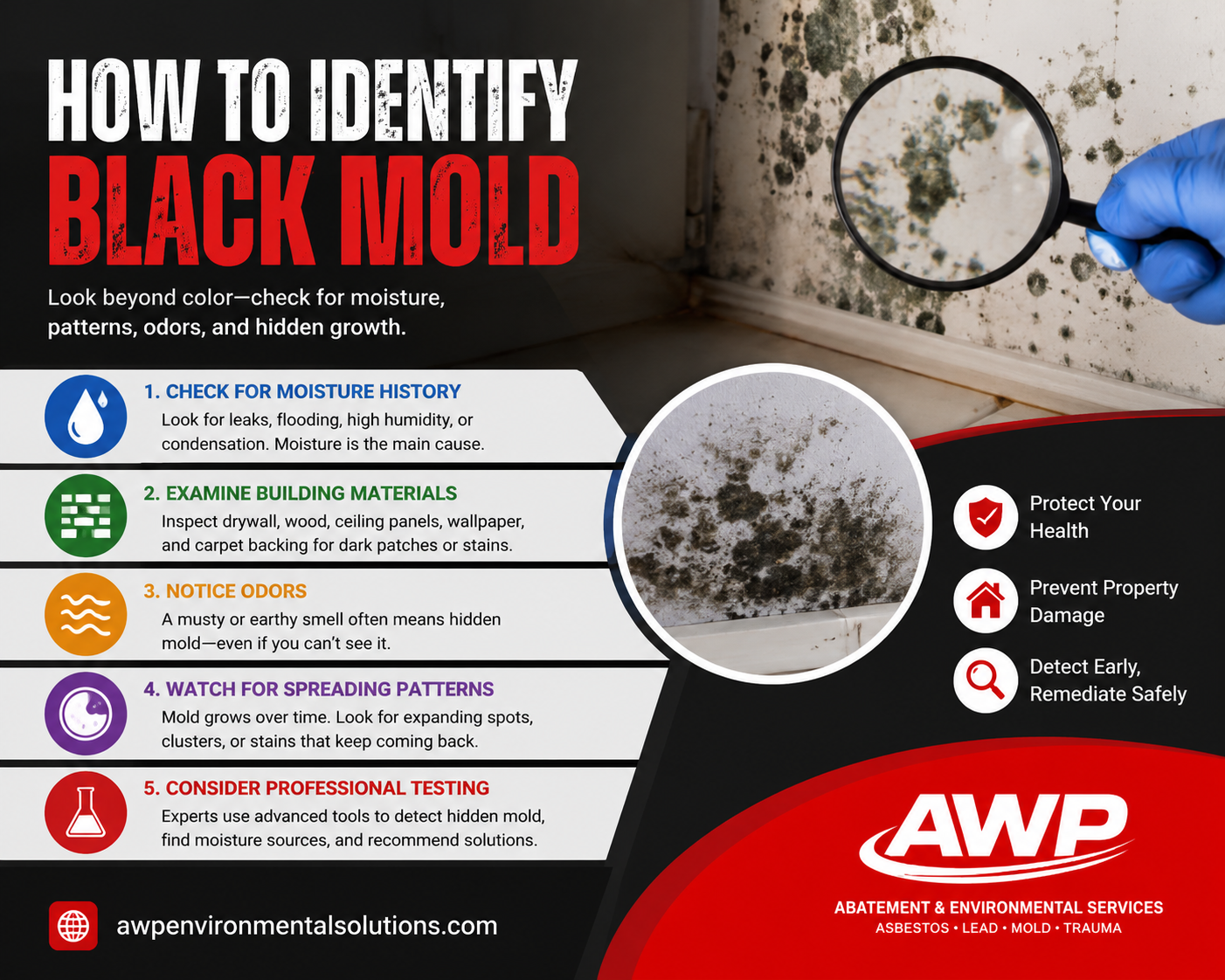
Identifying mold accurately requires considering the property’s moisture history, the affected materials, visible growth patterns, and other signs of contamination.
1. Check for Moisture History
The first step in identifying black mold is determining whether the area has experienced ongoing or past moisture problems. Mold cannot grow without moisture, making water intrusion one of the strongest indicators of potential contamination.
Look for signs of:
- Roof leaks
- Pipe leaks
- Flooding
- HVAC condensation
- High indoor humidity
Even if the leak has been repaired, mold may continue growing behind walls, under flooring, or inside ceilings if materials were not dried properly. Areas that remain damp for more than 24 to 48 hours are especially vulnerable to mold growth.
2. Examine Building Materials
Black mold commonly develops on porous materials that absorb moisture. Carefully inspect areas where water damage has occurred, paying close attention to hidden spaces behind furniture, inside closets, and around plumbing fixtures.
Common materials affected include:
- Drywall
- Wood framing
- Ceiling panels
- Wallpaper
- Carpet backing
Visible signs may include dark patches, fuzzy or slimy growth, peeling paint, warped surfaces, or staining. However, mold can also develop behind walls and beneath flooring where it cannot be easily seen.
3. Notice Odors
One of the earliest signs of hidden mold is a persistent musty or earthy odor. Even when no visible mold is present, this smell often indicates microbial growth inside walls, ceilings, crawl spaces, or HVAC systems.
If the odor becomes stronger after rain, plumbing leaks, or increased humidity, it may suggest that moisture is continuing to feed hidden mold colonies. A lingering musty smell should never be ignored, particularly if occupants are also experiencing allergy-like symptoms indoors.
4. Watch for Spreading Patterns
Unlike dirt, soot, or ordinary stains, mold continues to expand as long as moisture remains available. Small spots may gradually grow larger, merge together, or spread across nearby surfaces over time.
You may notice irregular circular patches, clusters of dark discoloration, or growth extending along drywall seams, wood grain, or ceiling joints. If the affected area continues increasing despite repeated cleaning, it is likely that moisture remains trapped beneath the surface and mold is continuing to grow.
5. Consider Professional Testing
If mold covers a large area, repeatedly returns after cleaning, or appears following significant water damage, professional inspection is often the safest option. Certified mold professionals use specialized equipment such as moisture meters, thermal imaging cameras, and air or surface sampling when appropriate to determine the extent of contamination.
Professional testing can help identify hidden mold behind walls or under flooring, locate the source of moisture, and guide the most appropriate remediation plan. This is especially important when structural materials are affected or when occupants have ongoing respiratory concerns.
Is Black Mold Dangerous?
One of the most common questions property owners ask is is black mold dangerous.
The answer depends on several factors, including:
- Amount of mold present
- Length of exposure
- Individual sensitivity
- Existing health conditions
Current scientific evidence shows that mold exposure may contribute to health symptoms, particularly in susceptible individuals.
These may include:
- Nasal congestion
- Sneezing
- Eye irritation
- Persistent coughing
- Skin irritation
- Asthma flare-ups
- Respiratory discomfort
While the phrase toxic black mold is commonly used, it is important to understand that not every dark mold produces harmful toxins, and not every exposure leads to illness. However, any extensive indoor mold growth deserves prompt attention because it indicates moisture problems that can worsen over time.
Understanding Black Mold Health Effects
The potential black mold health effects can vary significantly from person to person, depending on factors such as the level of exposure, overall health, and any existing respiratory conditions. While some individuals may experience only mild symptoms such as coughing, sneezing, nasal congestion, or eye irritation, others may be more sensitive to mold exposure.
Higher-risk groups include infants, older adults, individuals with asthma, people with chronic lung disease, and those with weakened immune systems, as they may be more likely to experience respiratory discomfort or complications when exposed to mold-contaminated environments.
Possible symptoms include:
- Respiratory Irritation: Mold spores may irritate the nose, throat, and lungs.
- Allergic Reactions: Some individuals experience sneezing, watery eyes, or skin irritation after mold exposure.
- Asthma Symptoms: Existing asthma may become more difficult to manage in mold-contaminated environments.
- Indoor Air Quality Concerns: Even when occupants experience few symptoms, widespread mold growth often indicates poor indoor environmental conditions that should be corrected.
How to Kill Black Mold Safely
Many homeowners search for how to kill black mold after discovering small patches. For limited surface mold on non-porous materials, cleaning may sometimes be appropriate if the moisture source has already been eliminated. However, DIY cleaning has limitations.
Avoid simply painting over mold or using bleach as a permanent solution. Surface cleaning alone may not remove mold growing inside porous materials such as drywall or insulation.
Professional remediation becomes appropriate when:
- Mold covers large areas
- Water damage affected structural materials
- Mold repeatedly returns
- Occupants experience ongoing health concerns
- Hidden mold is suspected behind walls or ceilings
The primary goal should always be correcting the moisture source first. Without moisture control, mold will likely return regardless of the cleaning method.
What Happens During Professional Black Mold Remediation?
Professional black mold remediation Charlotte NC follows established industry procedures designed to reduce the spread of contamination while addressing the underlying cause.
A typical process includes:
- Inspection and Moisture Assessment: Technicians identify visible mold and locate moisture sources using specialized equipment.
- Containment: Affected areas are isolated to help prevent spores from spreading throughout the property.
- Removal of Damaged Materials: Depending on the extent of contamination, damaged drywall, insulation, or flooring may require removal.
- Cleaning and HEPA Filtration: Specialized cleaning methods and HEPA filtration help remove mold spores from surfaces and indoor air.
- Moisture Correction: Leaks, drainage issues, or humidity problems must be corrected before restoration begins.
Professional remediation addresses both the mold itself and the environmental conditions that allowed it to grow.
Preventing Mold Growth Before It Starts
Preventing mold is usually easier than removing it.
Good preventive practices include:
- Repair plumbing leaks promptly.
- Keep indoor humidity below recommended levels.
- Improve ventilation in bathrooms, kitchens, and laundry rooms.
- Dry water-damaged materials within 24 to 48 hours whenever possible.
- Schedule inspections after flooding or major water events.
- Maintain roofing, gutters, and drainage systems.
Preventive maintenance protects both building materials and indoor air quality.
Environmental Remediation Services Support Long-Term Property Protection
While mold is one of the most common environmental concerns, it is not the only issue that can affect the safety and condition of a property. Comprehensive environmental remediation services often address a range of hazards that may result from water damage, contamination, or aging building materials.
- Water damage can create conditions that encourage mold growth and weaken structural materials.
- Environmental remediation may include the safe handling and removal of hazardous building materials when required.
- Contaminated drywall, insulation, flooring, and other building components may need to be removed before restoration.
- Early identification and remediation of environmental hazards can help prevent further property damage.
- Addressing environmental issues promptly may reduce long-term repair costs and minimize disruption.
- A comprehensive remediation approach helps restore a safer, healthier indoor environment for occupants.
When Mold Damage Requires More Than Surface Cleaning
When mold growth has spread into structural materials following water intrusion, professional remediation may involve selective removal of affected building components before restoration begins.
- Mold that spreads into structural materials after water intrusion often requires more than surface cleaning.
- Professional remediation may involve the selective removal of contaminated building materials.
- Selective demolition Charlotte services can safely remove affected drywall, insulation, flooring, and other damaged materials.
- This process helps contain contamination while preserving unaffected areas of the property.
- Targeted demolition creates a clean and stable environment for effective mold remediation.
- It also prepares the space for restoration and rebuilding once remediation is complete.
- Using a selective approach minimizes unnecessary demolition, reducing repair costs and project timelines.
Conclusion
Understanding black mold, how it differs from regular mold, and recognizing the warning signs of moisture damage can help property owners respond before contamination becomes more extensive. While not every dark stain is black mold, any persistent mold growth deserves attention because it often signals an underlying moisture problem that will continue unless properly addressed.
Professional assessment provides a clearer understanding of the extent of contamination and helps determine the most appropriate remediation strategy. AWP Environment Solutions works with homeowners, property managers, and commercial building owners to identify moisture issues, safely remediate mold, and restore healthier indoor environments. If you suspect mold growth in your property or need guidance after water damage, get in touch with us to discuss the next steps and determine whether professional evaluation is appropriate.